
Nutrition and Addiction Recovery?
Nutrition and Addiction Recovery go hand in hand. In the treatment of addiction and substance abuse, a variety of approaches is most effective, as opposed to just one. In addition to medical and psychological treatments, exercise and good nutrition have been shown to improve results on the road to recovery.
Addiction can cause drug use to take precedence over other things in life. Things you once found important suddenly take a back seat. Relationships with friends and family, your physical and mental health, your financial stability, all can take a hit. Food for drug addiction recovery is a new process that can help patients on their road to recovery.
Among these unhealthy consequences of drug use, your nutrition can also suffer as highlighted by a recent MedlinePlus report. While recovery can encompass many types of treatments that you’ll need all your energy to focus on, cooking is one thing you don’t have to worry about at New Choices. We take care of healthful nutritional meals for you while you focus on getting back to you.
Effects of Drug Use on Nutrition and Diet
The negative effects of drug use on nutrition include:
- Decreased appetite
- Less motivation for healthy eating
- Poor attention and energy put towards diet
- Decreased caloric intake
- Lack of ability to absorb nutrients
- Nutritional deficiency
- Depletion of nutrients already in body
- Increased cravings for unhealthy food
Of course, the above is a general list, where different drugs may have different effects on nutrition and addiction recovery. For example, marijuana increases appetite in the short term, but has been seen to reduce weight in its users long-term in a mechanism that is not well-understood.
A healthy diet consists of taking in just enough calories so that your body has enough energy to do what it needs throughout the day, maintaining a healthy weight, and exercising the right amount. Nutrition and addiction recovery is a personal process that needs personalized plans and steps that fit an individual’s lifestyle.
Drug use interferes with appetite, and motivation to seek out nutritious food can get overridden by cravings for the illicit drug as addiction takes its hold. Thus, the body would not be taking in enough calories to function as it normally should.
Nutritional deficiency can occur in several different ways depending on the drug.
For example, a given drug decreases your body’s ability to absorb nutrients, so even if you eat the same amount, the nutrients just pass right through you unprocessed. They might pass through your body but at a much faster pace and larger amount. Because of this, you would require more nutrients than a non-using state to function.
A drug could also exacerbate cravings for unhealthy food, which leads to less nutritional content taken into the body.
With the variety of drugs out there, one could overeat or undereat depending on the drug of choice, leading to a myriad of unwanted results.

Overeating and Addiction
Drugs like marijuana can make you overeat, which can have a multitude of side effects that potentially lead to self-esteem issues and other mental health issues down the line. Food for drug addiction recovery can help with both ends of the spectrum.
Overeating can lead to weight gain, bloating, indigestion, flatulence, discomfort, and pain as well as longer-lasting issues like obesity, diabetes, heart disease, blood pressure, and mental decline. In addition, overeating may veer into the realm of food addiction, occurring alongside drug addiction as a comorbid condition. They have been linked together as causing similar processes in the brain to occur that feel rewarding at first, and then move onto a maintenance stage, where more of the food or drug is taken in to keep up a minimum dosing to prevent withdrawal symptoms.
An important part of recovery is getting to the root of addictive behaviors and controlling them, with treatments such as CBT, as well as using a variety of approaches to attack it from multiple angles. A healthy controlled diet helps too, and at New Choices, our chefs can take care of that for you by knowing that nutrition and addiction recovery are interdependent.
Undereating and Addiction
Drugs like nicotine can decrease your appetite, and the presence of caffeine can exacerbate this effect, according to the National Library of Medicine and other government study groups. These studies and groups are key to improving the odds of successful nutrition and addiction recovery.
When you’re busy, finding time to get enough food can seem like a scarcity. Your energy is redirected to fueling the addiction, leaving little room for thoughts of food. This can lead to a dangerous level of undereating, which can have a number of negative consequences:
- Malnutrition
- Anemia
- Depression
- Infertility
- Osteoporosis,
- Weakened immune system
- Fatigue
- Hair loss
- Impaired growth
- Skin issues
- Constipation
- Constantly feeling cold
At New Choices, we make sure you get three full meals a day plus a snack, all with the proper nutrients to get you through your nutrition and addiction recovery.
What Makes Up a Healthy Diet?
There are various categories of food that provide many types of benefits and caveats. Healthy eating requires natural, whole, unprocessed foods with no additives, such as the healthy meals provided at New Choices.
More than just avoiding unhealthy and banned substances, one of the key dimensions in recovery is learning to balance all aspects of life in the process. Incorporating intense workouts, healthier eating habits, better lifestyle choices, and embracing attempts to avoid being a wet or dry drunk, are all part of the process to stay sober. If you or a family member are looking for help, our local Phoenix Arizona location can help.
The 3 Macronutrients You Need for a Smooth Recovery
There are three types of macronutrients, and all of them are needed in certain amounts to maintain a balanced and healthy lifestyle. With the right types and amounts, you can tackle your recovery at full force with nutrition and addiction options.
- Carbohydrates
- Proteins
- Fats
1. Nutrition and Addiction Recovery with Carbohydrates
Carbohydrates provide energy which comes in healthy and unhealthy forms.
The most common types are sugars, fibers, and starches, explains the Harvard School of Public Health. Of the three macronutrients, it provides the most efficient form of energy.
Getting the right amount of the right type of energy, rather than empty calories, will put you on the right track to a healthy recovery. After all, recovering would be pretty tricky if you didn’t have enough energy to do it. New Choices can give you the right boost to get you there by taking a holistic approach to nutrition and addiction recovery.
Good Carbs
The healthy forms, such as fruits, vegetables, and whole grains are also a good source of vitamins, minerals, fiber, and phytonutrients.
Good carbohydrates give the benefit of a healthier immune system, whether you are a CrossFit athlete or an everyday person trying to work out a little more.
Bad Carbs
The unhealthy forms, such as pastries, sweet desserts, white bread, and sugary drinks, especially processed food, provide what are referred to as “empty calories,” which can increase your chances of weight gain, heart disease, and diabetes.
Portion Size
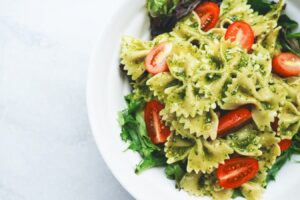
A good amount of good carbohydrates would be about a quarter of your plate or 1 cup.
2. Nutrition and Addiction Recovery with Proteins
Proteins help your muscles, skin, bone, and hair grow. They also help out a lot with various processes in your cells to keep you healthy and functioning. Since proteins help build up muscles, having an appropriate amount of them in your diet is conducive to a good recovery. A healthy dose is, of course, provided in the meals at New Choices.
On the other hand, a protein deficiency can lead to a range of problems, reports Healthline, including:
- Decreased muscle mass
- Skin, bone, and hair problems
- Fatty liver
- Stunted childhood growth
- Infections more severe
The 9 essential amino acids found in proteins that are needed in your diet can be found in:
- Meats
- Eggs
- Soy
- Tofu
- Quinoa
- Buckwheat
- Dairy
Portion Size
In this case, body weight matters. For every 20 pounds you weigh, you should take 7 grams of protein daily. As an example, a 140 pound person would need about 50 grams of protein each day.
For someone struggling with a drug or alcohol addiction, replacing those substances with healthier alternatives is a smart step to take. CrossFit and similar programs that focus on health and nutrition are athlete-tested and shown to be effective. Even programs like Alcoholics Anonymous focus on diet and exercise addiction correlations as they offer drug-free sports focused on the entire body. Being smart with portions and eating habits is part of the recovery process.

3. Nutrition and Addiction Recovery with Fats
While fats may have a bad reputation, you can’t completely cut them out of your diet as part of your nutrition and addiction plan. A healthy recovery benefits from having all elements of a nutritious diet present. Fats are needed for:
- Insulation (keeping warm)
- Hormone production
- Absorbing nutrients
- Energy
- Cell Growth
Good Fats
The good fats have benefits for your heart. These are usually liquid at room temperature and consist of unsaturated fats, which can be monounsaturated or polyunsaturated.
The mono- and poly- denotation refers to how many double bonds are in the chemical structure of the fat, with mono- being one and poly- being many.
Which is Better?
Both mono- and polyunsaturated fats can lower bad cholesterol in your blood, but polyunsaturated has the additional benefits of providing nutrients and vitamin E, while being known as essential fats, which the body needs but can’t make itself.
Omega-3 and omega-6 are types of polyunsaturated fats that help prevent heart disease and include fish oils.
Monounsaturated fats include olive, canola, sesame, peanut, and safflower oil.
Polyunsaturated fats include corn, soybean, and sunflower oil.
Bad Fats
Trans fats are the worst of the two offenders according to Harvard Health, with no known health benefits and as such have been banned from the United States since 2015.
According to the American Heart Association, unsaturated fats, on the other hand, are available in many foods, such as fatty beef, pork, chicken, lamb, butter, cheese, dairy, lard, and cream. They are also linked to heart disease in addition to increasing proportion of bad cholesterol in the blood.
Calories and Eating Habits
A standard low-fat diet should consist of no more than 30% caloric intake from fats. For example, if you intake 2000 calories a day, a maximum of 50 grams per day has been recommended.
The diet should consist of a caloric intake that contains 5-6% saturated fats. For example, if you intake 2000 calories per day, a maximum of 120 calories can come from saturated fat.
Get the Skills to Control Your Nutrition in Addiction Recovery With New Choices
The micronutrients consist of vitamins and minerals, which assist with everyday bodily functions and cannot be made in the body, and so must be obtained from diet. These are typically obtained from fruits and vegetables. Fats and proteins are attained through the foods that are consumed as well. These are all components of nutrition and addiction recovery options.
Working on diets and nutrition can be the building block of an overall healthier lifestyle. Work with our team at New Choices to get started on your nutritional journey. You do not have to go about recovery with a white-knuckling sobriety approach. You can experience active recovery, as well as long-term recovery, from any addiction you have faced, from drugs and alcohol to performance-enhancing drugs, and everything in between. We are here to help you take that first step towards understanding food for drug addiction recovery. Speak with a New Choices Treatment Centers team member to get started on your path to sobriety.